
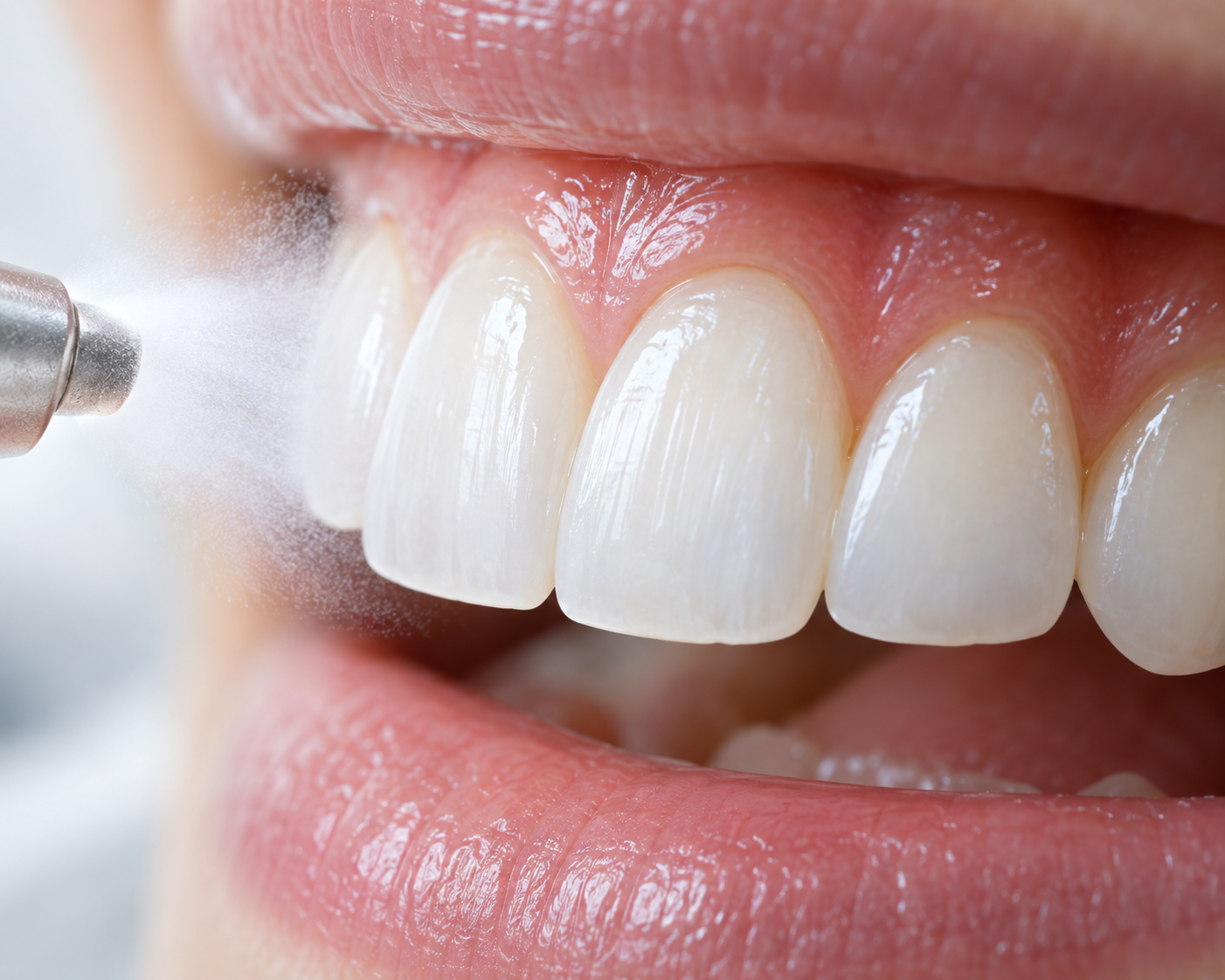
Teeth whitening, when performed correctly—using the appropriate products and concentrations and following an evaluation of the teeth—is not the same as „polishing” or removing enamel. The most common adverse reaction is temporary sensitivity. The risk and severity of this reaction depend on the condition of the teeth, the concentration of the product, and the treatment protocol used.
Why does tooth sensitivity occur after teeth whitening?
Whitening agents can temporarily increase tooth sensitivity to cold or air. For most patients, this reaction is temporary, but its intensity varies. Teeth with gum recession, cracks, or pre-existing sensitivity may react more strongly.
Does teeth whitening remove enamel?
Teeth whitening does not work by mechanically abrasing the enamel. It acts chemically on the pigments. However, improper use of the products, inappropriate concentrations, or repeated, unmonitored procedures can increase the risk of irritation and sensitivity.
Why is a consultation important before teeth whitening?
Cavities, defective fillings, cracks, gum inflammation, and tooth sensitivity must be identified before the procedure. If there are any active problems, they may need to be treated first.
Does teeth whitening hurt during the procedure?
Some people feel almost nothing, while others may experience brief episodes of sensitivity. If significant pain occurs, the procedure must be adjusted. It is not normal for a patient to consider severe pain a necessary condition for achieving a good result.
What can be done to improve sensitivity?
The dentist can adjust the protocol, the application interval, and the concentration of the product, and can recommend desensitizing products. If sensitivity persists or is very severe, a possible dental cause unrelated to whitening should also be investigated.
Who should avoid or postpone teeth whitening?
Each patient’s situation is different. Untreated cavities, gum inflammation, severe tooth sensitivity, or certain front-tooth restorations may require addressing other issues before undergoing cosmetic treatment.
Does teeth whitening affect fillings and crowns?
It does not whiten them as much as natural teeth. That is why there may be a difference in shade after treatment. This is particularly important for fillings and crowns that are visible in the front of the mouth.
What teeth-whitening services does SmileCity offer?
SmileCity offers teeth whitening and teeth whitening for front fillings. For current rates and other cosmetic services, visit the SmileCity pricing page. See SmileCity prices
The same applies here—it needs to be changed
How can you reduce the risk of problems?
Choose a treatment based on a clinical evaluation, not on general recommendations found online. Tell your dentist if you have sensitive teeth, front dental work, cracks, or if you’ve had adverse reactions to a previous whitening treatment.
What actually happens during bleaching?
Professional teeth-whitening products use agents that penetrate the tooth’s structure and alter the pigments responsible for its color. The procedure is not intended to „polish” or remove enamel. However, safety depends on the concentration, contact time, protection of the tissues, and adherence to the instructions. This is precisely why medically supervised procedures differ from the repeated and uncontrolled use of products purchased at random.
Why does tooth sensitivity occur after teeth whitening?
Temporary sensitivity is one of the most commonly reported side effects. It may occur because tooth permeability temporarily increases during the procedure, allowing stimuli to reach sensitive structures more easily. The intensity varies from patient to patient and may be influenced by the product’s concentration and pre-existing sensitivity. It is usually temporary, but you should discuss it with your dentist if it is intense or persistent.
Who should be evaluated more carefully before teeth whitening?
Patients with active cavities, cracks, gum recession, significant tooth sensitivity, or gum problems need to be evaluated before the procedure. Teeth whitening does not correct these problems and may increase discomfort in certain situations. Additionally, fillings, crowns, and veneers in the front teeth area must be taken into account because they do not change color in the same way as natural teeth.
Why isn't it a good idea to aim for „as white as possible” at any cost?
Teeth have a biological limit to their response to whitening, and very light shades in photographs may be due to lighting, editing, or ceramic restorations. Excessive repetition of procedures in pursuit of an unattainable result offers no benefits. A healthy goal is a brighter, more natural shade, determined in relation to the initial appearance and the individual’s response.
Are professional teeth whitening treatments and at-home products the same thing?
No. The products differ in concentration, formula, contact time, and how they protect the gums. At the dentist’s office, the dentist can evaluate your teeth beforehand, isolate the tissues, and adjust the treatment plan if there is sensitivity. At-home products may be suitable in certain situations, but using them without an evaluation or for longer than the recommended time increases the risk of irritation and discomfort.
How can you reduce the risk of sensitivity?
Tell your dentist if you have experienced sensitivity before, and do not extend the procedure beyond the recommended duration. Depending on the case, desensitizing products or an adjustment to the treatment protocol may be recommended. After whitening, it may be helpful to temporarily avoid very cold or very acidic foods. If the pain is severe or lasts longer than expected, contact your dentist.
What is the difference between sensitivity and enamel damage?
Temporary sensitivity does not automatically mean that the enamel has been „damaged.” It is a biological response that can occur even when the procedure is performed correctly. Actual damage to the tooth surface is a separate issue and can be exacerbated by highly acidic or abrasive products, or by excessive use. It is precisely this distinction that explains why the protocol and supervision matter more than the mere fact that a product is labeled „whitening.”.
When should the procedure be stopped and a doctor consulted?
If severe pain, significant gum irritation, or persistent sensitivity occurs, the procedure should not be continued automatically. The dentist may modify the protocol, recommend a break, or investigate other causes of the pain. Teeth whitening is an elective procedure, and patient comfort and dental health take priority over achieving a lighter shade quickly.
Frequently Asked Questions
Does professional teeth whitening thin the enamel?
It does not work by grinding away the enamel. However, the protocol must be chosen correctly and applied responsibly.
Is sensitivity after teeth whitening normal?
It may occur temporarily, but its intensity varies from person to person.
Can I whiten if I have cavities?
Cavities must be evaluated and, as a rule, treated before undergoing a cosmetic teeth-whitening procedure.
Can I use very strong products at home to get results faster?
It is not recommended to use inappropriate products or concentrations without professional guidance.
If I have crowns on my front teeth, will teeth whitening even out the color?
Not necessarily, because crowns don't whiten like natural teeth.