
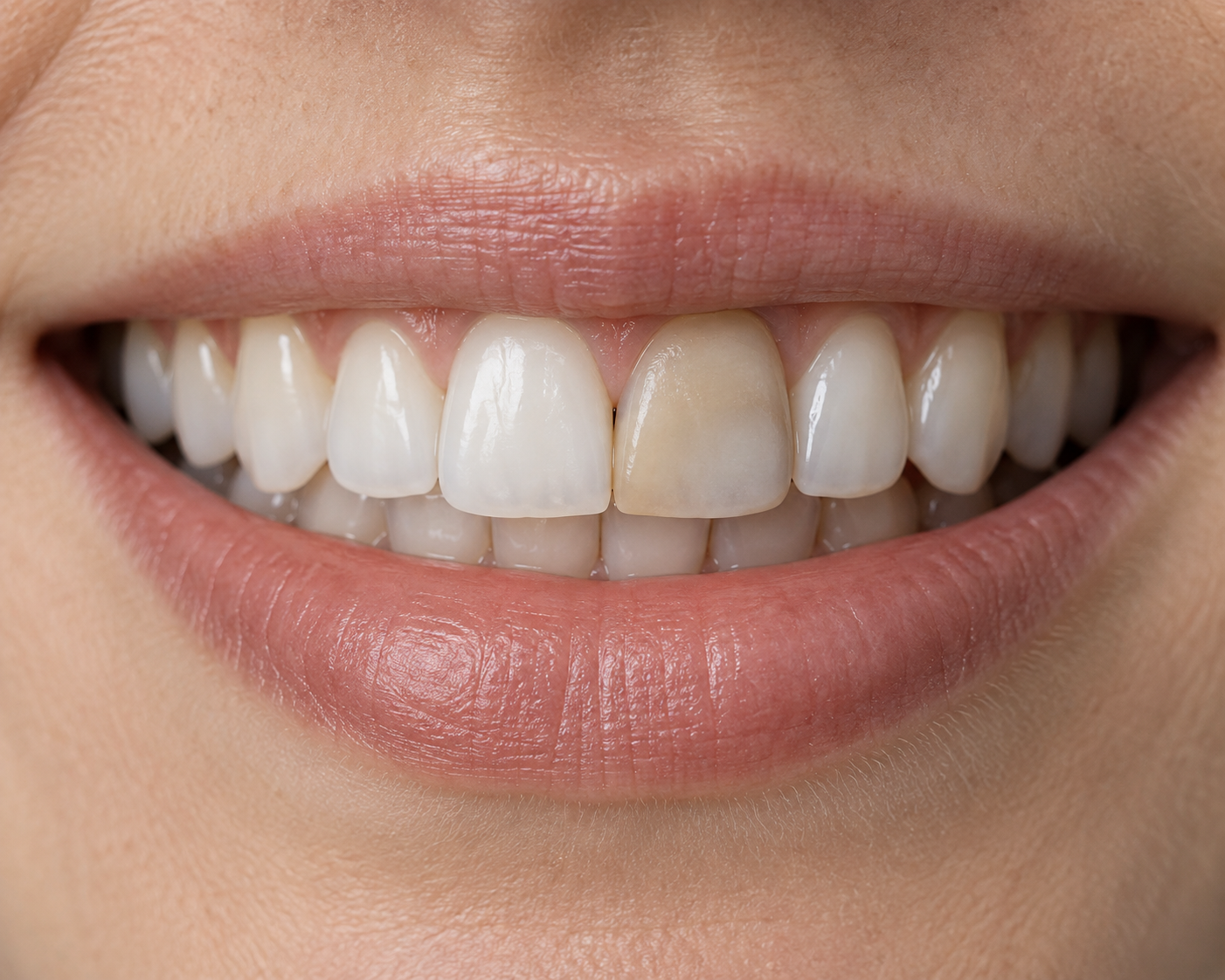
A filling on a front tooth may become more noticeable over time due to stains, wear, changes in the natural tooth color, or changes in the surface of the composite material. The solution can range from simple finishing and polishing to repairing or replacing the filling. Before proceeding, it must be determined whether the problem is purely cosmetic or if there is also a leak or secondary decay.
Why does a front filling change color?
The composite material can absorb or retain pigments over time, especially with frequent consumption of coffee, tea, and red wine, as well as smoking. The edge between the filling and the tooth may also become more visible if the surface wears down or becomes stained.
Could it just be that my teeth are lighter after whitening?
Yes. If you’ve had your teeth whitened after the filling was placed, the natural tooth may become lighter in color, while the filling remains roughly the same shade as before. In this case, the filling appears darker even though its material hasn’t changed significantly.
Can a stained filling be polished?
Sometimes, yes. If the discoloration is superficial and the filling is otherwise healthy, professional finishing and polishing can improve its appearance. If the color difference is within the material itself or the shape is no longer correct, another solution may be needed.
When should a filling be replaced?
Replacement may be recommended if the filling is damaged, has defective edges, shows signs of secondary decay, presents a significant aesthetic discrepancy, or no longer fits properly. It is not recommended to replace a healthy filling simply as a matter of routine, without a clear reason.
How do you choose the color of a new filling?
The dentist compares the shade of the tooth and may use multiple layers of composite to mimic its natural opacity and translucency. In the front teeth, shape and texture are just as important as color selection.
What if I also want teeth whitening?
The order is important. If teeth whitening is planned, the color of the final restoration is often chosen after the shade of the teeth has stabilized. Otherwise, a new filling may no longer match the tooth after the enamel changes color.
Can a front filling be repaired without having to be completely replaced?
In certain situations, yes. If only one area is affected, the dentist may decide that a local repair is sufficient. The decision depends on the condition of the margins, the size of the filling, and the reason for the change in appearance.
How much do fillings and teeth whitening cost at SmileCity?
SmileCity publishes pricing for fillings, teeth whitening, and teeth whitening for front fillings. For the most up-to-date prices, visit the pricing page. See SmileCity prices
When should a filling that has darkened in color be checked?
If the change is new, the edge appears black, you experience tenderness, or you feel that the surface has chipped, schedule a checkup. A simple change in color may be purely cosmetic, but sometimes it hides a problem that needs to be treated.
Why might a front tooth filling discolor over time?
Composite is an aesthetically pleasing material, but its surface is exposed daily to coffee, tea, tobacco, and other sources of pigment. In addition, microscopic wear can make the surface less smooth and more prone to staining. Discoloration can also occur at the margin between the filling and the tooth, where deposits or infiltration must be distinguished from a simple superficial stain.
When is polishing enough, and when does the filling need to be replaced?
If the problem is superficial, finishing and polishing can improve the appearance. However, if the material is deeply stained, the margin is no longer tight, there is secondary caries, or the shape of the restoration is compromised, replacement may be more appropriate. The decision is made after examination to avoid unnecessarily replacing a filling that is still functional.
Can there be tooth decay under a filling that just looks darker?
Yes, that’s why any new change at the edge of a restoration is worth checking out. A dark color doesn’t automatically mean a cavity, but it also can’t be properly assessed based on a photo alone. The dentist examines the margin, the consistency of the tissues, and, if necessary, recommends further testing. The goal is to distinguish between a cosmetic issue and a biological one.
How does bleaching affect an old filling?
If natural teeth are whitened, the filling generally retains its original shade. A restoration that previously appeared well-integrated may become more noticeable after the procedure. For this reason, when a patient wants both teeth whitening and a front filling replaced, it’s helpful to plan the order of these procedures with the dentist.
How do you choose the color of a filling for a front tooth?
The choice isn't limited to a single shade of white. Teeth have areas with varying degrees of translucency, opacity, and intensity. The dentist can combine materials and replicate the shape and luster of the tooth surface so that the restoration blends in as naturally as possible. Lighting, the tooth’s moisture content, and the color of the adjacent teeth all influence the decision.
How often should a front seal be inspected?
There is no separate time frame specifically for fillings, but they are evaluated during routine dental checkups. The dentist checks the fit of the edges, the shine, the color, wear, and any cracks. If changes are detected early, sometimes a minimal intervention—such as polishing or a local repair—is sufficient, rather than completely replacing the restoration.
Can only part of the filling be repaired?
In certain situations, yes. If the restoration is largely healthy and the defect is localized, the dentist can repair or reshape only the affected area. This approach preserves more of the existing dental material and tissue. If the problem is extensive or the margin is compromised over a large area, a complete replacement may be more predictable.
Frequently Asked Questions
Can a filling be whitened with whitening gel?
Not in the same way as a natural tooth.
Can coffee stains on a filling be removed?
Sometimes, the surface finish can be improved through professional finishing and polishing.
Does the seal need to be replaced if it's darker?
Not automatically. First, her clinical condition and the reason for the color difference must be assessed.
Can I get my teeth whitened after having a filling replaced?
You can, but for anterior restorations, the order of the treatments is important to avoid differences in shade.
Does a dark-colored edge mean tooth decay?
Not always, but it should be checked by a doctor.