
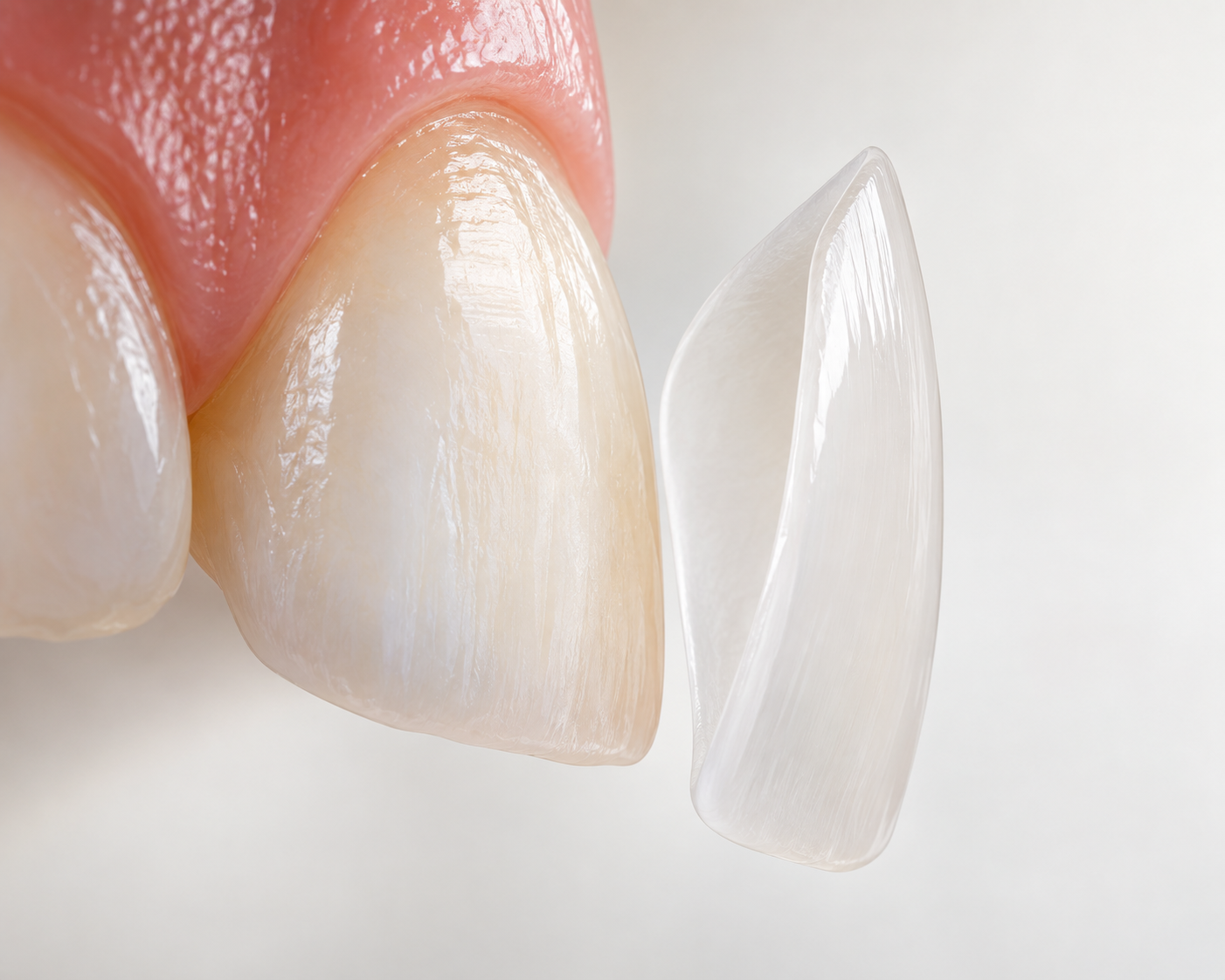
The teeth beneath the veneers remain natural teeth and still require oral hygiene and regular checkups. The veneer primarily covers the visible surface; it does not make the tooth immune to decay, nor does it replace the enamel or the root. If properly indicated and well maintained, a veneer can improve the appearance of the teeth while preserving a significant amount of dental tissue.
Do dental veneers „ruin” teeth?
There is no single “yes” or “no” answer that applies to every case. A veneer usually requires a certain amount of tooth preparation, and this is irreversible. That is precisely why the decision must be made carefully, and unnecessary preparation of healthy teeth that could be treated more conservatively should be avoided.
How much of the tooth is ground down for a veneer?
The amount of tooth structure removed varies depending on the tooth’s position, color, and shape, as well as the desired result. Some cases allow for minimal preparation, while others require more space for the ceramic restoration. There is no one-size-fits-all thickness that applies to all patients.
Can tooth decay develop under a veneer?
Yes. The natural tooth remains susceptible to decay, especially at the edges of the restoration, if oral hygiene is poor or other risk factors are present. Brushing, flossing, and regular checkups remain essential.
Does the veneer cover the entire tooth?
No. Unlike a crown, a veneer primarily covers the front surface and certain edges of the tooth. For this reason, it is generally a more conservative restoration when properly indicated.
What happens if a veneer comes loose or breaks?
The situation must be assessed quickly. Sometimes the veneer can be re-cemented; other times, it must be remade. The cause is important: trauma, bruxism, compromised adhesion, or improper forces can influence the solution.
How long do Emax veneers last?
Lifespan varies depending on oral hygiene, bite, bruxism, diet, and the quality of the bond. There is no guarantee that they will last a certain number of years for every patient, but regular checkups and proper care of the restorations can extend their lifespan.
What kind of care does it require?
Brush your veneers just as you would your natural teeth, and be sure to clean between your teeth. Avoid using your teeth to tear open packages or break objects, and talk to your dentist if you grind your teeth.
How much do Emax veneers cost at SmileCity?
SmileCity offers Emax ceramic veneers as part of its services. For current pricing and other cosmetic dentistry options, visit the SmileCity pricing page. See SmileCity prices
When are veneers a good option?
They can be helpful for certain issues related to color, shape, proportion, or minor imperfections, but they are not a one-size-fits-all solution for every aesthetic concern. Sometimes, teeth whitening, orthodontics, or composite restoration may be more conservative options.
Does a dental veneer protect the tooth from cavities?
No. A veneer primarily covers the visible surface of the tooth, while the tooth structure remains exposed in other areas. Cavities can develop at the edge of the restoration or on the uncovered surfaces if poor oral hygiene and diet contribute to this. A veneer is not a substitute for brushing, flossing, and regular checkups.
Why does it matter how much of the tooth is exposed?
Proper planning aims to preserve as much healthy enamel as possible. The amount of preparation required depends on the tooth’s position, the desired shape, color, and type of veneer. Some cases allow for minimal preparation, while others require more space to ensure the result isn’t bulky. The promise of „no grinding for everyone” is unrealistic.
What happens if a veneer comes loose or cracks?
The situation must be evaluated by a dentist. Sometimes the veneer can be re-cemented if it is intact and conditions are favorable; in other cases, it must be replaced. The tooth underneath is examined for cracks, cavities, or other problems. It is not recommended to reattach it at home using makeshift adhesives, as these can damage the surface and complicate treatment.
Can the veneers be replaced in the future?
Yes, but replacement requires an evaluation of the remaining tooth structure and the creation of a new restoration. Veneers should not be viewed as a temporary procedure that you can try without consequences. Once the tooth has been prepared, it will still require a restorative solution. That is why the indication must be carefully determined from the outset.
What habits can affect the veneers?
Biting your nails, chewing on pens, opening packages with your teeth, and bruxism can increase the risk of chipping or loosening. Patients who grind their teeth may be advised to wear a night guard. Maintaining the results requires both good oral hygiene and protecting the restorations from forces for which they were not designed.
How are veneered teeth checked during routine checkups?
During the checkup, the dentist examines the edges of the veneers, the condition of the gums, the contacts between the teeth, and any signs of decay or detachment. X-rays are not necessary at every visit, but may be recommended when there is a suspicion of a problem or when areas that are not directly visible need to be evaluated. Proper maintenance transforms veneers from a simple cosmetic procedure into a treatment that can be monitored over the long term.
Can sensitivity occur after having veneers placed?
Sometimes there may be temporary sensitivity after preparation and cementation, especially when exposed to cold. This usually subsides as the tooth adjusts. However, severe, spontaneous, or persistent pain should be evaluated, as it may indicate a problem that should not automatically be attributed to the normal adjustment process.
Do dental veneers require special care?
You don’t need a complicated routine, but careful brushing, cleaning between your teeth, and regular checkups are essential. Special attention is paid to the edges of dental restorations and gum health, since gum inflammation can affect the appearance of your smile even if the veneers themselves are intact.
Frequently Asked Questions
Can a tooth develop a cavity under a veneer?
Yes, especially around the edges of the restoration if hygiene and risk factors are not controlled.
Can the veneer be removed and the tooth remain exactly as it was before?
Generally speaking, no, because tooth preparation is irreversible.
Do veneers need to be replaced after a certain number of years?
There is no standard timeframe that applies to all patients. They are replaced when there is a clinical or cosmetic reason to do so.
Can I eat normally with veneers?
Yes, but it's a good idea to avoid using your teeth on very hard objects and to manage bruxism.
Do veneers turn white?
Unlike natural teeth, the color of the ceramic remains largely stable.