
Surgical Wisdom Tooth Extraction: When Is It Recommended?
A healthy, cleanable wisdom tooth with no pathological issues can be monitored periodically. Extraction becomes necessary when it causes repeated episodes of inflammation, difficult-to-treat cavities, damage to the adjacent molar, or other documented problems. Its mere presence on an X-ray is not a sufficient indication.
Listed price for this service: 450 lei. The rate does not include examinations, restorations, or other procedures; the estimate will be determined following a consultation. View the official price list
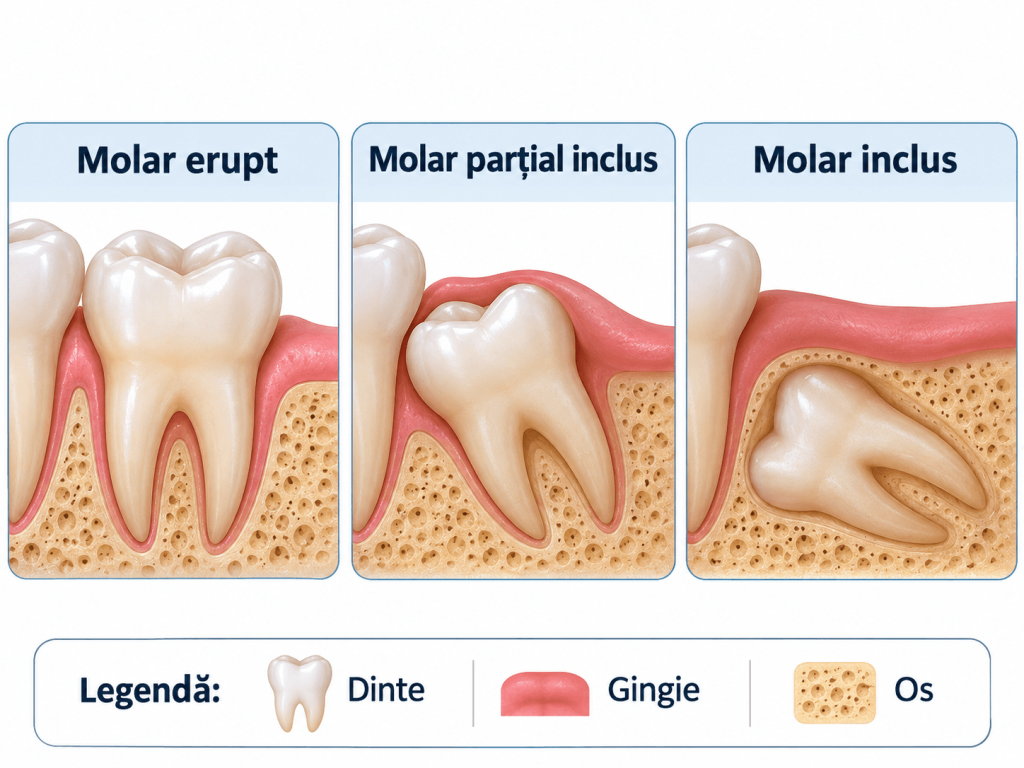
How do we assess the position of a molar?
An examination of the gums and an X-ray help identify the orientation of the crown, the length of the roots, and the relationship with the adjacent tooth. For a lower molar located very close to the nerve, selective 3D imaging may be indicated if the results affect the treatment plan. The choice of technique is based on anatomy and symptoms.
Why is it called "surgical"?
Unlike a simple extraction, this procedure may require opening the gum, removing a small amount of bone, or sectioning the tooth. The procedure is usually performed under local anesthesia, and the wound may be sutured afterward. The duration of the procedure cannot be estimated until the case has been evaluated.
When choosing a treatment, Schedule an appointment at SmileCity and explain your symptoms and medical history to the doctor.
How is the recovery going?
Swelling, discomfort when opening the mouth, and temporary difficulty chewing may occur. The first few days are the most sensitive; follow the recommendations you received regarding diet, oral hygiene, and follow-up visits. If pain worsens after initial improvement or if bleeding continues, contact your doctor.
How is healing monitored?
After the procedure, it is important to avoid pressure from the prosthesis on the area, to maintain good oral hygiene as instructed, and to attend scheduled follow-up appointments. Follow-up X-rays are recommended when they affect the clinical decision. The implant is placed only after the dentist determines that the bone support is adequate.
Risks to Discuss During the Consultation
Possible complications include alveolitis, infection, damage to an adjacent tooth, or—for certain lower molars—sensitivity in the lip, chin, or tongue. The risk is not the same for all patients; the doctor assesses it based on imaging and may discuss alternatives, including observation.
What You Should Clarify Before Treatment
Before making a decision, discuss any questions specific to your case with your doctor: If it doesn't hurt, does it need to be removed? Is it normal for my cheek to swell? The answers depend on the clinical examination, diagnostic tests, and your individual treatment plan.
Frequently Asked Questions
If it doesn't hurt, does it need to be removed?
Not necessarily; a tooth with no abnormalities can be monitored.
Is it normal for your cheek to swell?
Some degree of inflammation is common; a significant worsening requires reevaluation.
Are all wisdom teeth removed?
No. Those that are healthy, well-positioned, and easy to clean can be kept, provided they are monitored.
When can I go back to work?
It depends on the complexity of the procedure and the type of activity. For physical exertion, the doctor may recommend a longer rest period.
How can I recognize possible alveolitis after a tooth extraction?
Pain that worsens after a few days, rather than subsiding, may indicate a complication and warrants a dental checkup.