
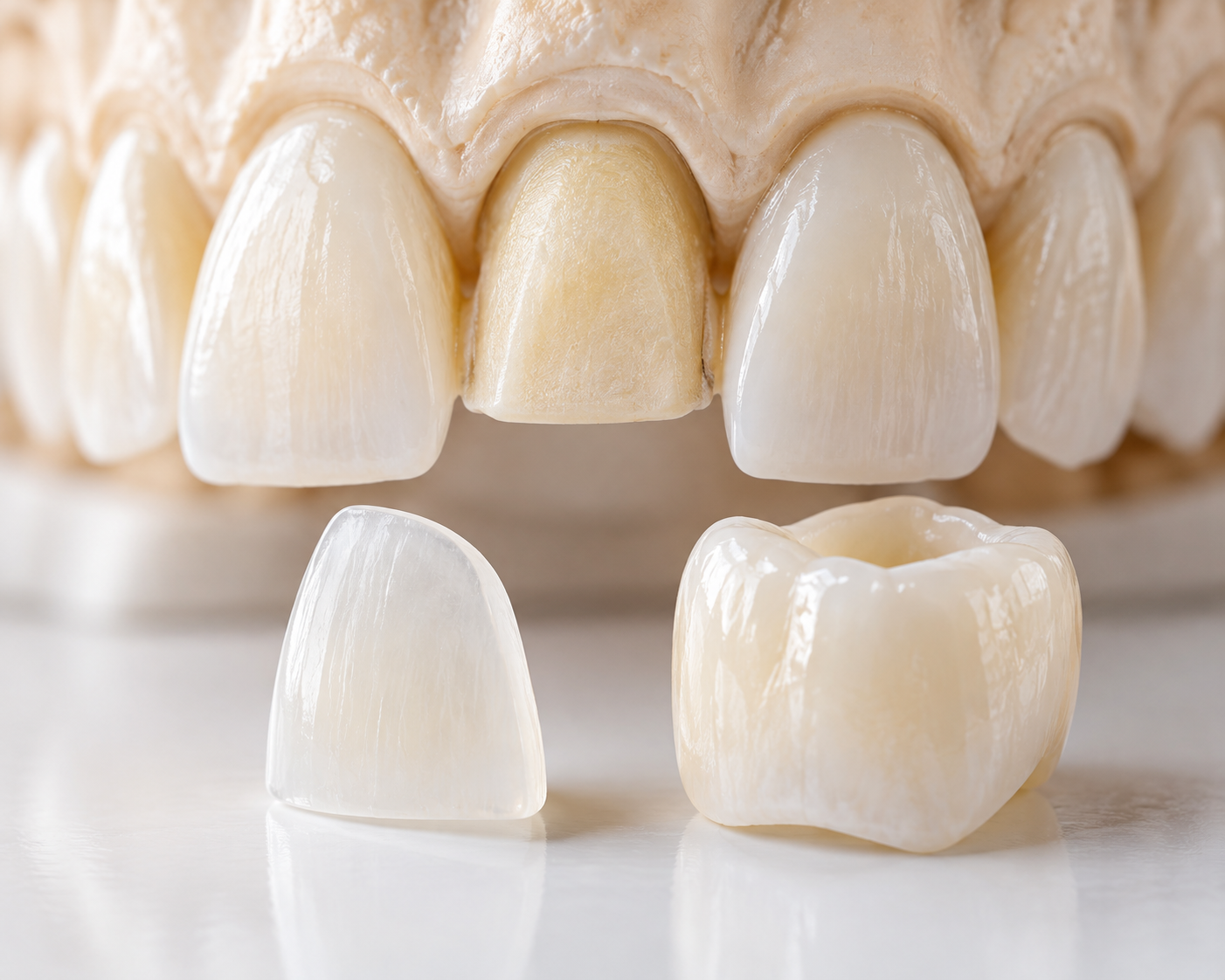
Veneers and crowns can improve the appearance of a front tooth, but they are not equivalent treatments. A veneer primarily covers the visible surface of the tooth and is usually a more conservative solution, while a crown covers a much larger portion of the tooth and is recommended especially when the tooth structure is significantly compromised. The right choice depends on how much of the natural tooth can be preserved.
What is a dental veneer?
A veneer is a thin shell designed for the visible surface of a tooth. It can correct the shape, color, minor misalignments, or proportions of a tooth. SmileCity offers Emax ceramic veneers, a material valued for its aesthetic properties and translucency, which closely resembles that of natural teeth.
What is a dental crown?
A crown covers the tooth on multiple surfaces and is used when the tooth requires a more extensive restoration. It may be recommended following significant loss of tooth structure, fractures, endodontic treatments, or extensive fillings, depending on the situation.
When is a single veneer enough?
A veneer may be an option when the tooth is largely healthy but there is a cosmetic issue with its shape, color, or proportion. However, it is not suitable for every defect and should not be chosen simply because it is perceived as „more aesthetically pleasing.”.
When is a crown the best option?
If the tooth is severely weakened, fractured, or has little healthy structure remaining, a crown may provide more appropriate coverage and protection. The dentist aims to preserve as much healthy tooth structure as possible while also ensuring that the restoration has sufficient support.
Is Emax suitable for front teeth?
Emax ceramic is frequently used in the front teeth due to its aesthetic properties. SmileCity offers both Emax veneers and Emax ceramic crowns, so the material can be used in various treatments, depending on the extent of the tooth’s damage.
Which looks more natural: a veneer or a crown?
Both can look very natural if they are properly indicated, planned, and fabricated. The result depends on the color of the underlying tooth, the thickness of the ceramic, the position of the gingival margin, the shape of the adjacent teeth, and the quality of the dental laboratory.
Which option requires more sanding?
In general, a crown requires preparing a larger area of the tooth than a veneer. However, the exact amount of tissue removed varies from case to case and should not be determined solely by the type of procedure.
How much does a veneer or a crown cost at SmileCity?
SmileCity publishes separate pricing for Emax ceramic veneers, Emax ceramic crowns, and zirconia crowns. For the most up-to-date prices and information on other prosthetic services, please visit the pricing page. See SmileCity prices
How do you make the right decision?
The useful question is not „which option is better?” but „how much restoration does this tooth need?” If a large amount of healthy tissue can be preserved, a more conservative solution may be preferred. If the tooth is severely damaged, a crown may be more suitable for long-term stability.
How much of the tooth is covered?
The fundamental difference lies in the amount of tooth structure that the restoration covers. A veneer is primarily intended for the visible surface of the tooth and is used in situations where there is sufficient healthy tooth structure. A crown surrounds the tooth to a much greater extent and is more often chosen when the tooth is weakened, heavily restored, fractured, or in need of additional structural protection. For this reason, the two treatments are not interchangeable based solely on aesthetic criteria.
When is aesthetics alone not enough to make a decision?
A tooth may appear to be the wrong shape or color, but the treatment plan must also take into account strength, bite, and treatment history. If there is a large filling, cracks, or significant loss of tooth structure, a thin veneer may not provide the necessary protection. Conversely, a healthy tooth with a purely cosmetic issue should not be prepared for a crown without a clear clinical indication.
Is Emax the same for veneers and crowns?
Emax refers to a type of ceramic, not to the type of restoration. Different restorations, including veneers and crowns, can be made from the same material, each with its own specific indications. The choice of material is made after determining the type of restoration the tooth requires. For front teeth, the aesthetic properties of the ceramic may be important, but they do not replace a structural evaluation.
How does the bite affect the choice?
People with bruxism, strong dental contacts, or certain tooth positions can exert significant forces on anterior restorations. The dentist evaluates how the tooth contacts the opposing teeth before recommending a veneer or crown. Sometimes it is necessary to adjust the treatment plan, use a night guard, or treat other issues to improve the predictability of the outcome.
What does a conservative solution mean?
In dentistry, a conservative approach means preserving as much healthy tooth structure as possible without compromising strength or prognosis. Therefore, if the problem can be resolved with a less invasive restoration, that option may be preferred. However, a crown remains a very useful solution when the tooth requires more extensive coverage and protection.
How does the appearance of the gums affect the final result?
For front teeth, the result depends on more than just the ceramic material. The shape of the gums, the level of the gum line, and the health of the tissues strongly influence the symmetry of the smile. Inflamed or bleeding gums can compromise both the impression and the final appearance. That is why, in some cases, gum cleaning and stabilization are necessary steps before placing a permanent veneer or crown.
Frequently Asked Questions
Is a veneer always the best option for a front tooth?
No. The choice depends on the structural condition of the tooth, not just its position.
Can a crown look natural on an incisor?
Yes, with the right material and planning, a front crown can be integrated very well aesthetically.
Does a veneer protect a very weak tooth?
It is not intended to replace a crown when the tooth requires greater structural support.
Is Emax also used for veneers and crowns?
Yes. SmileCity offers both types of Emax restorations.
What should I do if the tooth is only slightly chipped?
For minor defects, a composite restoration—without a veneer or crown—may be sufficient.