
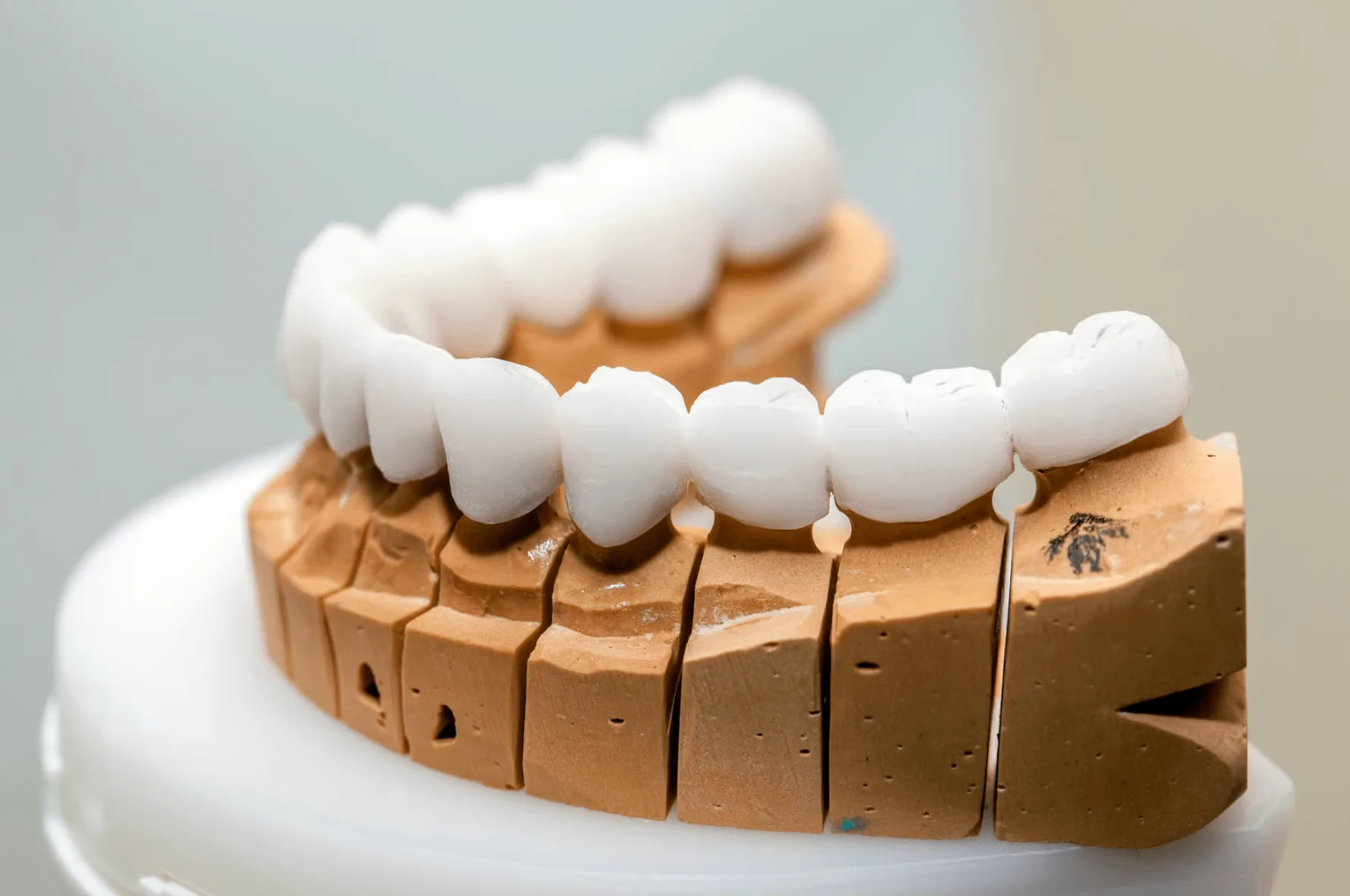
Zirconia crowns are among the most popular modern dental works.
Patients choose them for their natural look and strength.
One of the most frequently asked questions is simple:
„How long does it last?”
The short answer is that a zirconia crown can last for many years, but the exact duration varies from patient to patient.
In many cases, a dental crown has an average lifespan of about 10-15 years. In good conditions, with proper hygiene, regular check-ups and a balanced bite, some crowns can last even longer. The Cleveland Clinic notes that the average life of a dental crown is generally between 5 and 15 years, and studies on zirconia crowns show good results even after more than 10 years of use.
However, the durability of a crown depends on more than just the material.
It matters a lot:
- oral hygiene
- bite
- daily habits
- gum health
- regular checks
- the quality of the tooth under the crown
What is zirconia?
Zirconia is a durable ceramic material commonly used in modern dentistry.
It is chosen because it offers a good combination of strength and aesthetics.
Unlike older metal-supported work, zirconia crowns have no metal framework. Because of this, it does not have the same gray or metallic edge visible at the gumline that can be a problem with some metal-ceramic work.
Zirconia crowns can be used in both the frontal and cheek area, depending on the case, the bite and the doctor's recommendation.
Zircon is used for:
- dental crowns
- dental bridges
- implant work
An important advantage is that zirconia is considered a biocompatible material and contains no metal.
Valentin: and here and above modified. Zirconium is a metal
How long does a zirconia crown actually last?
There is no exact number of years for all patients.
A crown can last:
- 10 years
- 15 years
- over 15 years
- sometimes even more
How long it lasts depends very much on how it is maintained.
Many people think that once they have a crown, they don't have to worry about that tooth.
In reality, the crown needs to be cared for in much the same way as a natural tooth.
Even if zirconia doesn't decay, the tooth underneath can develop problems if hygiene is poor or if seepage occurs at the edge of the crown.
What can shorten the duration of a crown?
1. Poor oral hygiene
This is one of the most common causes.
Bacterial plaque and food debris can accumulate at the edge of the crown.
Over time they may appear:
- gum inflammation
- gum recession
- cavities under the crown
- unpleasant odor
- seepage at the edge of the work
Many patients believe that a crown can't have any more problems.
The problem is that the tooth under the work remains vulnerable if not cleaned properly.
2. Teething
Bruxism puts a lot of pressure on teeth and dental work.
Some patients grind their teeth without realizing it, especially during sleep.
Over time they may appear:
- wear
- cracks
- discomfort when chewing
- crown detachment
- problems with opposing teeth
Zircon is a very strong material, but the repeated forces of bruxism can damage any dental work.
In some cases, your doctor may recommend a protective night glove.
3. Eating habits and biting hard objects
Although zirconia is very strong, it is not indestructible.
Habits like:
- seed sprouting
- chewing ice
- pen biting
- red nails
- opening packaging with your teeth
...can damage the crown over time.
Repeated forces can cause microcracking, wear or loosening of the cement.
4. Gum problems
If the gum recedes over time, the edge of the crown may become visible.
Sometimes, the crown is still strong, but needs to be replaced for aesthetic reasons or because of seepage.
Therefore, gum health is very important for the duration of the work.
A good crown not only means a strong material, but also healthy gums around it.
How can you tell when a crown needs checking?
Some problems occur without pain.
However, there are a few signs that should send you for a check-up:
- sensitivity
- unpleasant odor
- mobility
- gum inflammation
- space between the gum and the crown
- discomfort when chewing
- feeling that the bite is not the same
- bleeding when brushing in the crown area
In many cases, problems discovered early are much easier to solve.
That's why it's important to have a crown checked regularly, even if it doesn't hurt.
How to properly maintain a zirconia crown
Care is very important.
The basic recommendations are simple:
- Brushing twice a day
- floss daily
- interdental brushes, if recommended
- oral douche, if recommended
- regular checks
- professional hygiene every 6 months or as recommended by your doctor
Many patients neglect the crown area because they no longer feel pain.
That's why regular checks are essential.
The doctor may notice infiltrates, inflammation or adaptation problems before the patient feels clear symptoms.
Zirconium or ceramic on metal?
Many patients compare these two options.
Zirconia crowns are commonly preferred for:
- good appearance
- lack of metal
- very good resistance
- good tolerance by the body
- the possibility to get a natural result
Metal-ceramic crowns can still be a solution in some cases, but they have a metal structure under the ceramic.
The choice depends on several factors:
- tooth position
- chewing forces
- available space
- aesthetic requirements
- tooth condition
- doctor's recommendation
There is no one perfect option for all patients.
Is it worth the investment?
For many patients, yes.
A well-made crown perhaps:
- restore tooth function
- improve aesthetics
- protect the affected tooth
- help more comfortable chewing
- last for many years
But the final duration also depends very much on the patient.
Hygiene, regular check-ups and avoiding habits that put pressure on your teeth make a big difference.
A zirconia crown is not something you put on and then ignore.
It's hard-wearing, but needs proper maintenance.
Conclusion
A zirconia crown can last for many years, especially if done correctly and well maintained.
In many cases the duration is around 10-15 years, and in good conditions it can be longer.
However, material strength alone is not enough.
Oral hygiene, gum health, biting, regular check-ups and daily habits directly influence the duration of your work.
Article written by the Smile City medical team. The information presented is for educational purposes and does not replace a personalized dental consultation.
Frequently asked questions about zirconia crowns
Can a zirconia crown break?
Yes, but it rarely happens. Zircon is very strong, but it's not indestructible.
The risk may increase with bruxism, unbalanced biting or habits such as chewing ice or biting hard objects.
Can it color over time?
Zircon takes longer to stain than a natural tooth, but hygiene remains important.
The appearance of the crown can be influenced over time by plaque, tartar, smoking, diet, gum condition and the color of neighboring teeth.
Can I eat normal with a crown?
Yes. After the adaptation period, chewing is usually normal.
However, it's best to avoid habits that put unnecessary pressure on the crown, such as chewing ice, breaking seeds or biting hard objects.
Does it hurt when it's on?
It shouldn't hurt during the procedure, as it works with local anesthesia.
After the procedure there may be temporary sensitivity, especially if the tooth has been damaged before or if the gum was sensitive.
How long does it take to make the crown?
It depends on the case and the technology used.
Sometimes it may take a few days, sometimes it may take several steps. In some practices, digital technology can shorten the turnaround time.
Your doctor can tell you the estimated time after your consultation and the treatment plan.
Does it need to be changed regularly?
Not compulsory.
A crown is changed when problems such as infiltration, under-crown decay, mobility, significant wear, fractures, visible gum recession or aesthetic problems occur.
If well maintained and checked regularly, it can last for many years.
Are there differences between types of zirconia?
Yes. There are several types of zirconia, with differences in strength, translucency and aesthetics.
Some versions are more suitable for the frontal area, where aesthetics are very important. Others are more suitable for the cheekbones, where chewing resistance is more important.
The choice is made on a case-by-case basis and on your doctor's recommendation.