
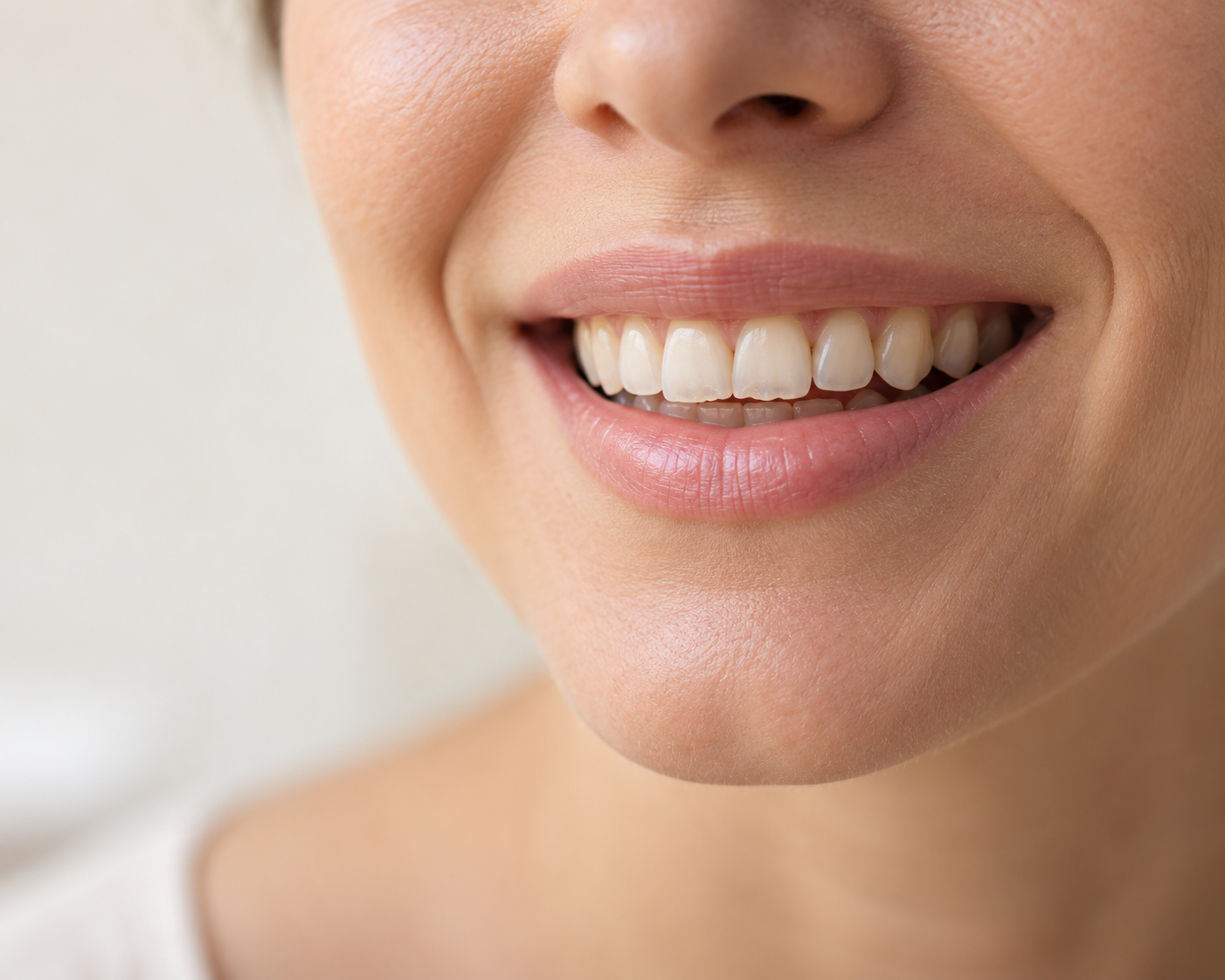
Worn-down teeth can be restored, but the first step is to identify why they have become shorter. If we simply restore their shape without addressing the underlying cause, the new restorations may wear down or fracture. Depending on the degree of wear, solutions may include composite restorations, veneers, onlays, or crowns.
Why do teeth wear down?
Wear can result from teeth grinding and clenching, uneven tooth contact, acids in the diet or acid reflux, habits such as biting on objects, or a combination of several factors. Sometimes the process is slow, and the patient doesn’t notice the change until years later.
How can you tell if you have tooth wear?
Signs may include flattened front edges, teeth that appear shorter, shiny or concave surfaces, sensitivity, and repeated small fractures. Older photos can be useful for comparing the length and shape of the teeth over time.
Is tooth wear just a cosmetic issue?
No. If it progresses, it can expose the dentin, increase sensitivity, and alter the bite. In advanced cases, the loss of tooth structure can affect the strength of the teeth and may require more extensive restorations.
Can worn-down teeth be restored with composite material?
In many mild or moderate cases, the cavity can be filled with a composite material. The advantage is that the tooth structure is preserved, but the strength and longevity depend on the type of wear and the forces exerted on the teeth.
When are veneers recommended?
Veneers may be considered when a more permanent correction of the shape and front appearance is needed, and the structure of the teeth allows for this approach. SmileCity offers Emax ceramic veneers, but the suitability of this treatment is determined after evaluating the bite and the amount of remaining enamel.
When are crowns or onlays needed?
For teeth that are more severely damaged, especially in the posterior region, restorations that cover a larger area—such as inlays/onlays or crowns—may be necessary. SmileCity offers Emax inlays/onlays, Emax crowns, and zirconia crowns.
Should bruxism be treated as well?
If wear is associated with teeth grinding or clenching, addressing the underlying cause is very important. The dentist can evaluate the bite and recommend protective measures so that the new restorations are not subjected to the same forces that damaged the natural teeth.
How much does it cost to restore worn-down teeth?
There is no single price, as the treatment plan can range from minor composite fillings to multiple ceramic restorations. For current pricing on fillings, veneers, crowns, and Emax inlays/onlays, please visit the SmileCity pricing page. See SmileCity prices
How does treatment begin?
Treatment begins with an assessment of the extent of wear and its cause. In some cases, photographs, scans, models, or X-rays are helpful. The treatment plan should aim to achieve both aesthetic restoration and long-term functional preservation.
Why do teeth wear down?
Wear can have several causes: teeth grinding and clenching, improper bite alignment, acid erosion, aggressive brushing, or a combination of these mechanisms. If only the shape is restored without identifying the cause, the new restorations may be subjected to the same forces that caused the initial wear. That is why diagnosis always comes before the aesthetic aspect.
How can you tell when wear and tear is no longer just a cosmetic issue?
Signs may include visible shortening of the incisors, transparent or irregular edges, sensitivity, cracks, changes in bite, or muscle fatigue. Sometimes the patient notices in photos that their teeth „disappear” when they smile. When wear is advanced, it can affect not only appearance but also function, and the treatment plan becomes more complex than simply lengthening a few front teeth.
Can teeth be restored with composite?
In certain cases, composite restorations allow for the addition of material and the restoration of shape with minimal tooth preparation. The advantage lies in their conservative nature and the possibility of repair. However, the indication depends on the amount of lost tooth structure and the forces involved in the bite. In more extensive cases, the dentist may discuss ceramic restorations, veneers, crowns, or combinations thereof.
When should veneers or crowns be considered?
Veneers may be appropriate when the problem primarily affects the shape and appearance of the front teeth, and the tooth structure allows for it. Crowns are primarily considered for weakened or heavily restored teeth. The choice is not made simply to „look better” in a general sense, but rather based on how much healthy tooth structure remains and the need for protection.
What role does bruxism play after dental restoration?
If the wear is related to bruxism, restoring the tooth’s shape does not automatically eliminate the habit. The dentist may recommend a protective night guard and monitoring of dental contacts. Protecting the restorations is important, especially when multiple teeth have been restored and a significant investment has been made in achieving a comprehensive aesthetic result.
Why Can Old Photos Help with Planning?
Older images of the smile can show what the teeth looked like before wear and how much their length has changed. This reference point can be useful when discussing proportions and aesthetic goals. The treatment plan does not necessarily aim to create „larger” teeth, but rather to restore a shape that is compatible with the patient’s face, smile, and bite.
Are only the front teeth being treated, or does the entire bite need to be addressed?
If the wear is localized and minimal, treatment may focus on just a few teeth. However, when multiple surfaces are worn down, restoring only the incisors can lead to improper contacts and excessive stress. In such cases, the dentist evaluates the entire bite and may plan a phased restoration of multiple teeth. The goal is for the new shape to look good and function properly when you chew or clench your teeth.
Frequently Asked Questions
Do worn-down teeth grow back?
No. Lost enamel does not regenerate, but the shape of the tooth can be restored.
Can bruxism shorten your teeth?
Yes, teeth grinding and clenching can contribute significantly to tooth wear.
Can I get veneers if I grind my teeth?
Sometimes it is possible, but bruxism must be evaluated and managed to reduce the risk of damage to dental restorations.
Do all worn-down teeth need to be covered with crowns?
No. Many cases can be treated more conservatively.
Can wear and tear cause sensitivity?
Yes, especially when the enamel thins and the dentin becomes more exposed.