
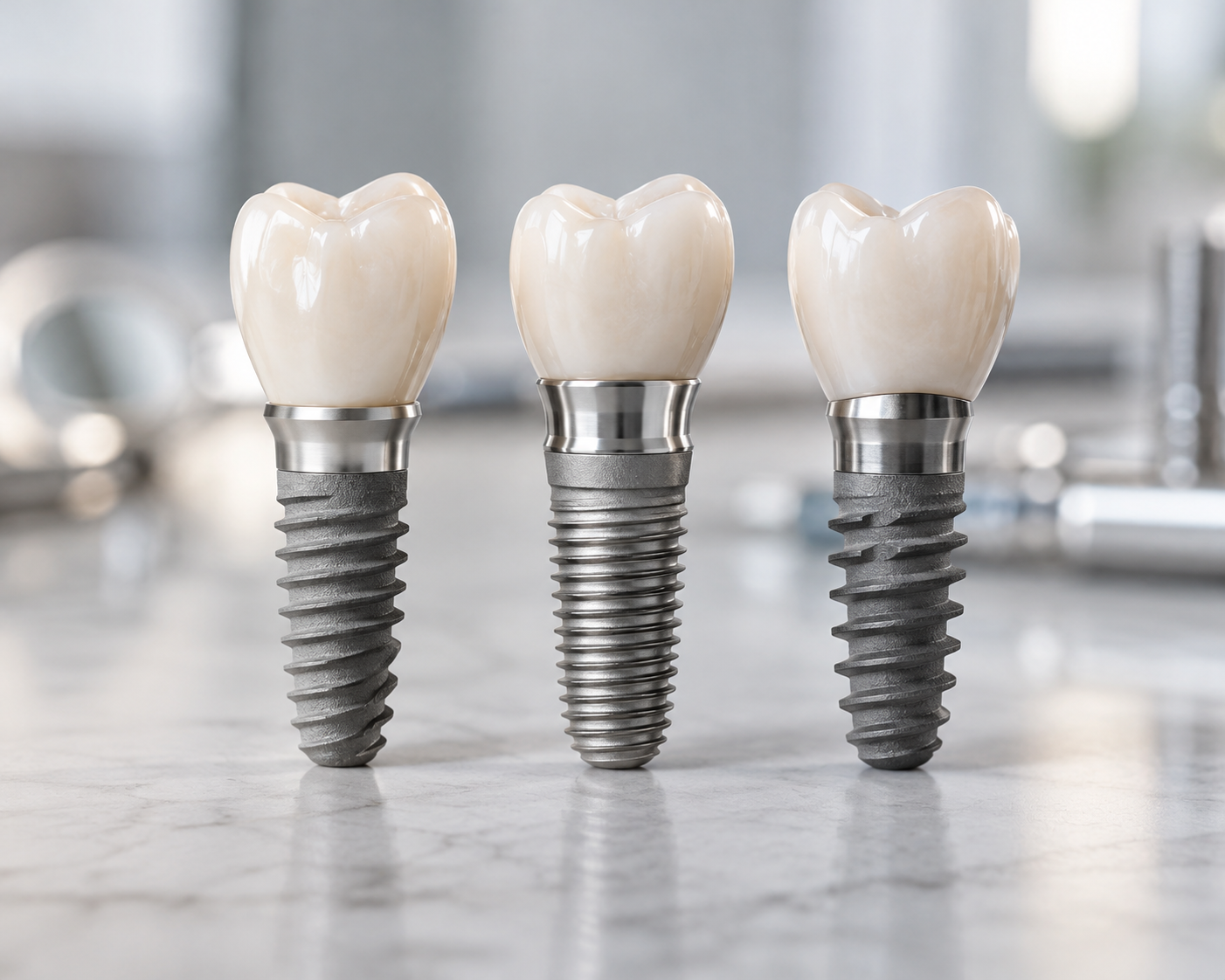
Dentium, Neodent, and Straumann are different implant systems, and the choice should not be based solely on the idea that the most expensive one is automatically the best. Anatomy, the dentist’s experience with the system, the clinical indication, the prosthetic components, long-term availability, and the patient’s budget all matter.
Why do patients so often ask, „What’s the best implant?”
The implant remains in the bone for many years, and the patient wants a safe choice. It’s natural for them to compare brands just as they would compare technical products. The problem is that implant treatment isn’t just a product you buy off the shelf.
The outcome depends on the diagnosis, the implant's position, the bone, the gums, oral hygiene, the load, the prosthetic restoration, and long-term monitoring. The brand is important, but it is only one part of the system.
What are Dentium, Neodent, and Straumann?
These are commercial dental implant systems, each with its own range of implants and prosthetic components. They may differ in terms of design, surfaces, connections, prosthetic options, digital workflows, and product portfolio.
SmileCity lists all three, allowing you to choose from a range of price points and technical solutions. View current prices for Dentium, Neodent, and Straumann BLX implants.
Is Straumann automatically the right choice for every patient?
No. Straumann is a very well-known name in implantology, but just because a system is premium doesn't mean that every clinical situation requires the most expensive option.
A more affordable implant, when properly indicated and correctly placed, can be an excellent choice. Conversely, a premium implant does not compensate for improper placement, poor oral hygiene, or a lack of follow-up care.
When can the implant's design make a difference?
The shape and surface of the implant can influence how the dentist addresses different bone densities, extractions, loads, and anatomical positions. These details are technical in nature and cannot be assessed by the patient based solely on a marketing chart.
The dentist usually chooses a system that provides stability and with which he or she is thoroughly familiar, both clinically and prosthetically.
What is the role of prosthetic components?
The implant is the part made of bone. Above it are the abutment and the prosthetic restoration. For a good result, it is important that the system provide components suited to the specific case and that it can be maintained and repaired over time.
The availability of components and system documentation are important factors, especially if the patient moves or needs repairs many years later.
Why is a doctor's experience so important?
A good system used in the wrong situation does not automatically produce a good result. The dentist must plan the three-dimensional positioning, manage the tissues, choose the timing of loading, and coordinate the prosthetic component.
The useful question isn't just „What brand do you use?”, but also „Why do you recommend this system for my situation?”.
How do we compare prices accurately?
The price listed for an implant usually refers to the surgical component, not necessarily the entire final tooth. You’ll need to check separately for diagnostic tests, bone grafting (if necessary), the abutment, and the crown.
Comparing two clinics based solely on „implant price” can be misleading if the packages include different items.
What should I choose if I'm on a tight budget?
Tell the doctor right away what your budget is. A realistic plan is better than choosing a premium plan that forces you to delay necessary treatment or follow-up care.
In some cases, you can prioritize health and function, with aesthetic or prosthetic options to be adapted later. The important thing is to understand the real trade-offs.
Is there an implant that lasts a lifetime?
No brand can guarantee an unlimited lifespan for every patient. The implant may function for a very long time, but the surrounding tissues require proper hygiene and regular checkups, and the prosthetic restoration may need maintenance or replacement.
Smoking, gum inflammation, bruxism, oral hygiene, and systemic diseases can affect the prognosis regardless of the brand.
How do I make the final decision?
- ask for an explanation of why the system is recommended;
- ask what's included in the price;
- Check to see if you need a bone graft;
- ask what final project is planned;
- discuss maintenance and inspections;
- Choose an option that you can afford until the end of treatment.
A good decision is one that is clinically justified and understood by the patient, not one based solely on name recognition.
What does implant success mean beyond the brand?
An implant can be integrated into the bone, but long-term treatment involves more than that: healthy gums, a crown that is easy to clean, a balanced bite, and access to replacement parts should repairs be needed.
That is why a good plan is designed by working backward from the final crown to the implant site, not just by choosing a screw.
What documents are worth keeping?
After treatment, it is helpful to keep a record of the implant system, size, and components, along with the X-rays and the prosthetic plan. This information may be useful if, years down the road, you need treatment at another clinic.
Ask the clinic what documentation you’ll receive at the end. Traceability is a practical criterion, not just a technical one.
How do you prepare for your appointment, and what information should you bring?
Make a note of when the problem started, what symptoms you’re experiencing, what dental treatments you’ve had in that area, and what medications you’re currently taking. If you have X-rays, CBCTs, medical reports, or documents regarding implants and previous dental work, bring them to your appointment. Tell your dentist if you smoke, have any allergies or chronic conditions, or are undergoing treatments that could affect healing. It’s also helpful to specify what concerns you most: pain, duration, aesthetics, cost, or the number of procedures. An effective consultation isn’t just about receiving a diagnosis—it’s about understanding your options, the sequence of steps, and the reasons why a particular approach is recommended. Ask for clarification if a term is unclear, and ask what happens if you choose to postpone treatment or opt for an alternative. This way, you can make an informed decision and accurately compare your options, rather than relying solely on the price of a single procedure.
Frequently Asked Questions
Is Straumann the best implant?
It is a very well-known premium system, but the best choice depends on the individual case and the doctor's treatment plan.
Is Dentium a good implant?
It may be a good option in many cases. The quality of the result doesn't depend solely on the brand.
Are Neodent and Straumann related?
Neodent is part of the Straumann Group, but it is a separate system with its own product portfolio.
Why do prices vary so much?
Clinics differ in terms of their systems, components, market positioning, and costs. Compare the entire treatment plan, not just the implant screw.
Can I choose the brand of the implant?
You can discuss your preference, but the final decision must be based on the patient's anatomy and the treatment plan.