
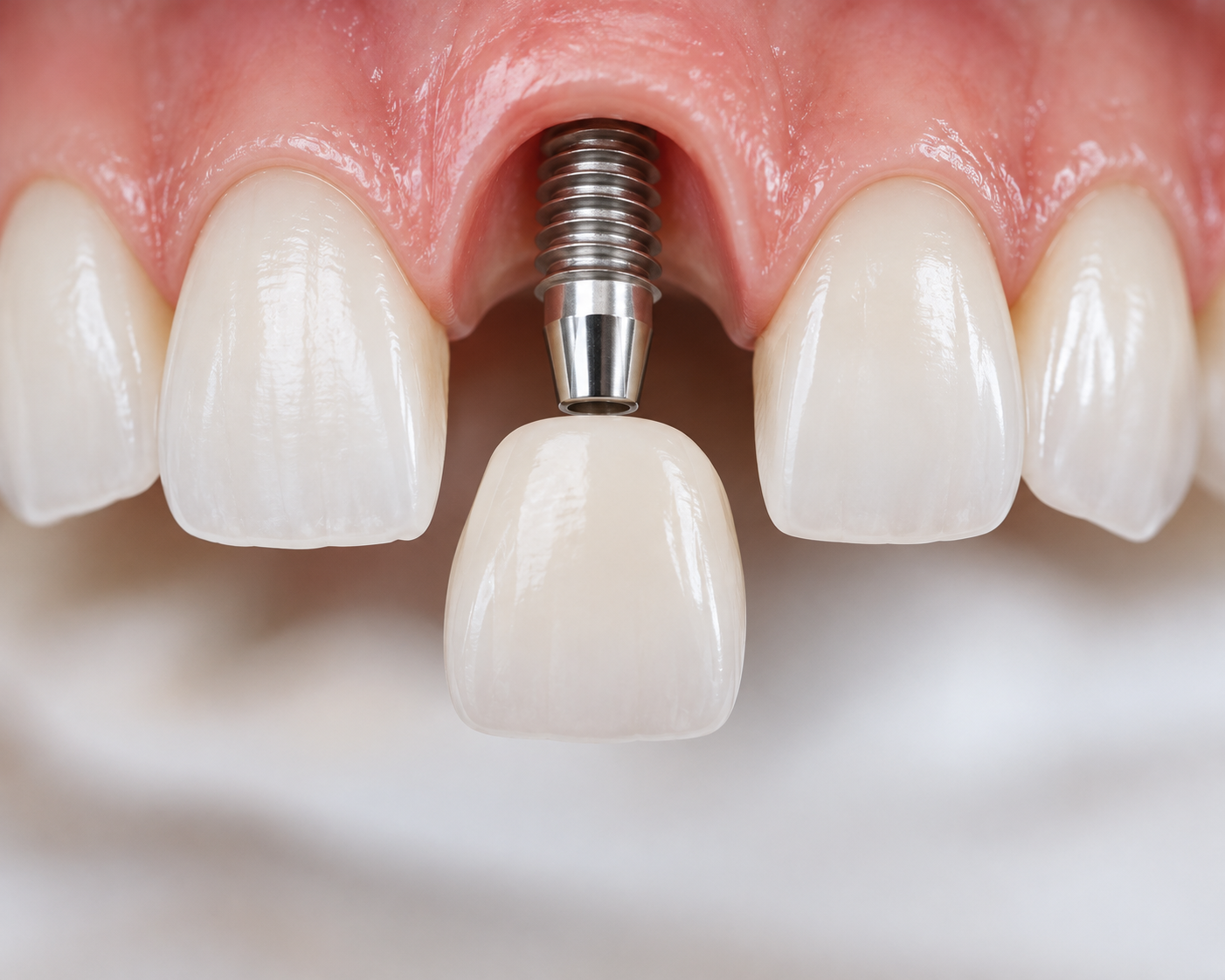
Local anesthesia is used during implant placement, so the procedure should not be painful. Once the anesthesia wears off, you may experience tenderness, swelling, and discomfort for a few days. Severe pain that worsens or is accompanied by a fever or discharge should be evaluated by a doctor.
Why is there so much fear surrounding dental implants?
To many patients, the word „implant” sounds like a much more invasive procedure than it actually is. This fear stems mainly from the association with surgery, stories heard from others, and uncertainty about what actually happens in the dentist’s office.
However, implant placement is a planned procedure. The dentist first examines the bone, the gums, the position of the anatomical structures, and the patient’s overall health. It is precisely this planning stage that minimizes surprises and allows for the selection of a technique best suited to the case.
What do you feel during implant placement?
The procedure is typically performed under local anesthesia. The patient may feel pressure, vibrations, or movement, but should not experience sharp pain. If discomfort occurs, it should be reported immediately to the doctor, who can administer additional anesthesia.
The duration of the procedure varies. An implant in an area with sufficient bone may require a relatively simple procedure, while a case involving extraction, bone grafting, or other procedures may take longer.
What is normal after an implant?
Once the effects of the anesthesia wear off, it is normal to experience some degree of local sensitivity. Swelling, a feeling of tightness, small bruises, or discomfort when chewing may occur. The severity varies greatly from patient to patient.
In general, symptoms should gradually improve. Your doctor may recommend measures to manage pain and inflammation, as well as guidelines regarding diet, hygiene, and physical activity during the first few days.
How long can the pain last after an implant?
Mild or moderate tenderness in the first few days may be part of the normal healing process. It is not helpful to directly compare your experience with that of another patient, as the extent of the procedure, the number of implants, and the need for additional procedures all affect the recovery process.
What matters is the direction in which the symptoms are progressing. Discomfort that gradually subsides is different from pain that gets worse after a few days.
When is pain no longer considered normal?
Contact the clinic if the pain is severe, worsens, or if you develop a fever, discharge, a persistent unpleasant taste, significant bleeding, or swelling that continues to increase. Persistent numbness or other unusual symptoms should also be reported to your doctor.
These signs do not automatically mean that the implant has failed, but they warrant a prompt evaluation to identify the cause.
Does bone grafting or a sinus lift make recovery more difficult?
If the implant procedure involves bone grafting or a sinus lift, the treated area is larger, and swelling and discomfort may be more pronounced. That is why two people who say they „had an implant placed” may experience very different recoveries.
SmileCity offers Dentium, Neodent, and Straumann BLX implants, as well as bone augmentation and sinus lift procedures. You can view the current rates here.
How can you make recovery easier?
- Follow the instructions you received after the procedure;
- Do not change the recommended treatment on your own;
- Avoid putting strain on the area that was operated on;
- Choose foods that are appropriate for the period immediately following the procedure;
- Follow the doctor's hygiene instructions exactly as directed;
- Be sure to attend your scheduled checkups.
It is most helpful to receive instructions tailored to your specific situation, rather than automatically applying advice found online that is intended for a different type of case.
Is getting an implant more difficult to handle than having a tooth extracted?
There is no one-size-fits-all answer. Some implant placements are perceived by patients as surprisingly easy, while some complex extractions may require a more intensive recovery. Comparing procedures based solely on their names is misleading.
The degree of difficulty depends on the anatomy, inflammation, bone structure, the duration of the procedure, and any associated procedures. Your doctor can give you a realistic idea of what to expect after reviewing your case.
What should you ask before the procedure?
Ask whether an extraction, bone graft, or sinus lift is needed, how many implants are required, and what the temporary tooth will look like if the area is visible. It’s also helpful to know when you’ll be able to return to work and when the final prosthetic phase is expected to take place.
A clear plan reduces anxiety more than the generic promise that „it won’t hurt.”.
What factors can make recovery easier or more difficult?
Recovery does not depend solely on the implant. It depends on whether the procedure was simple or involved extraction and grafting, the number of implants, the treated area, the quality of the tissues, and how the body responds to surgery. Smoking, poor hygiene, and failure to follow recommendations can complicate the healing process.
That is why the doctor asks about general health conditions, medications, and habits before the procedure. Accurate information is not just a bureaucratic formality; it is part of the risk assessment.
How do you prepare yourself mentally if you have anxiety?
Tell the scheduling staff that you’re anxious and ask them to explain the steps involved before the procedure. For many patients, their fear subsides once they know how long it will take, what they’ll feel, and what happens if the anesthesia isn’t strong enough.
Avoid reading only extreme stories on forums. Recovery from a procedure involving multiple implants and bone grafting is not comparable to the placement of a single implant in a straightforward area.
How do you prepare for your appointment, and what information should you bring?
Make a note of when the problem started, what symptoms you’re experiencing, what dental treatments you’ve had in that area, and what medications you’re currently taking. If you have X-rays, CBCTs, medical reports, or documents regarding implants and previous dental work, bring them to your appointment. Tell your dentist if you smoke, have any allergies or chronic conditions, or are undergoing treatments that could affect healing. It’s also helpful to specify what concerns you most: pain, duration, aesthetics, cost, or the number of procedures. An effective consultation isn’t just about receiving a diagnosis—it’s about understanding your options, the sequence of steps, and the reasons why a particular approach is recommended. Ask for clarification if a term is unclear, and ask what happens if you choose to postpone treatment or opt for an alternative. This way, you can make an informed decision and accurately compare your options, rather than relying solely on the price of a single procedure.
Frequently Asked Questions
Is a dental implant placed under anesthesia?
Yes. Local anesthesia is typically used, tailored to the procedure and the patient.
Is it normal for your cheek to swell?
Some swelling may occur after surgery. If it is severe or continues to increase, contact your doctor.
Can I go to work the next day?
Some people return to their normal activities quickly, but it depends on the extent of the procedure and the doctor's recommendation.
If it doesn't hurt at all, does that mean the implant is healing perfectly?
The absence of pain is encouraging, but success is assessed through clinical follow-up and, when indicated, imaging.
When should I call the doctor?
If the pain worsens, or if you develop a fever, discharge, heavy bleeding, progressive swelling, or any other symptom that concerns you.